Cepa Pura late harvest sweet 0,5 l 2019 Quinta do Montalto BIO
SKU: 996 EAN: 5600268605204


 Sale
Sale 
SKU: 996 EAN: 5600268605204

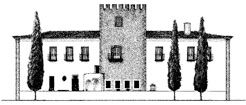
Farma Montalto (Quinta do Montalto), owned by the Gomes Pereira family for five generations, was founded in 1880. It extends over 50 hectares of vineyards, olive groves, orchards, and forests, which together form a beautiful landscape mosaic. The 15.5 hectares of vineyards are part of the extensive Lisbon wine region, planted in clay-limestone soil with excellent sun exposure, allowing the production of DOC Encostas D'Aire certified wines.
Farma Montalto is located in the central part of the country in the Ourém region, near the town of Fátima. In line with winemaking tradition, several grape varieties grow on the farm, most notably Aragonez and Fernão Pires, which are the most representative red and white grapes. Furthermore, we can find varieties such as Touriga Nacional, Trincadeira, Syrah, Baga, Alicante Bouschet, Castelão, Moreto, Sauvignon, Arinto, Rabo de Ovelha, and Olho de Lebre.
Out of full respect for environmental protection, all varieties at Farma Montalto are cultivated according to organic farming regulations under the control of ECOCERT-PORTUGAL. This means that no chemical fertilizers, herbicides, insecticides, fungicides, or other synthetic chemicals are permitted. No animal products are used either, making all wines suitable for vegetarians and registered with "The Vegan Society" based in the UK.
The Method – Medieval de Ourém
The vineyards have an average plot size of around 2,500 m², are typically un-trellised (without wires), and feature a balanced proportion of white and red varieties to craft this medieval wine. Only two varieties are used for its production: Fernão Pires for the white must and Trincadeira for the red must. These vineyards have a high vine density of over 4,000 plants per hectare, reaching up to 10,000 plants per hectare. The purpose of this choice is to obtain higher quality grapes rather than a larger production volume.
Most of these ancient vineyards are lined with olive and fruit trees, such as apple, pear, and peach trees, which are sometimes scattered throughout the vineyards. Following the "taça" (goblet/bush-trained) system, with three main arms spreading apart, the vines are pruned leaving short spurs and, less frequently, fruit-bearing canes. In all their characteristics, they mirror genuine medieval vineyards.
In the Ourém region, medieval wine is currently produced in small, characteristic wine cellars (modest, dark, and cool, but not damp, usually located underneath the living areas of the house). The harvest must be done by hand, and the white and red grapes are transported to the cellar in separate containers.
The white grapes are pressed, and the resulting must is used to fill wooden barrels up to 80% of their capacity, where fermentation begins.
Subsequently, the red grapes are destemmed using a "ciranda" directly into wooden vats called "dornas" (less frequently in stone "lagares"), and fermentation lasts four to ten days with grape skin maceration. At least twice a day, the cap is punched down using a wooden tool called a "rodo" to obtain a red must with the necessary quality parameters.
Near the end of both fermentations, the unpressed red must containing the skins (20%) is poured directly into the wooden barrels where the white must (80%) is fermenting, filling the remaining capacity for a joint final fermentation of both musts. When this final co-fermentation is complete, the cap sinks to the bottom of the barrel, helping to naturally filter the wine.
Although white grapes predominate, the medieval wine turns out "red" in appearance. The result is a smooth yet potent wine with a full, crisp, and complex palate. It is a unique nectar featuring the aroma of a white wine, which varies according to grape maturity, blended with the notes of a red wine—typically blackberry, raspberry, and strawberry. This wine pairs perfectly with the rich gastronomy of the region and several typical Portuguese dishes, especially those prepared with plenty of olive oil, such as grilled cod with "chícharos" (chickpea-like beans) and "migas" (thinly shredded cabbage leaves with rice, bread, and beans).
Explore our selection and experience the taste of history with Farma Montalto's medieval wines here!
Pairs well with: desserts, as a small "liquid candy", Gorgonzola
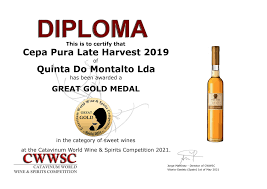
Award: Grand Gold - Catavinum World Wine & Spirits Competition 2021 - Spain
Grape variety: 100% Fernão Pires
Late harvest from the indigenous Fernão Pires grape variety thrives on the clay-calcareous soils of northern Lisbon under a Mediterranean climate with a clear Atlantic influence.
The minimum purchase price is 100 Kč.
Add one more bottle, and let's get started.